

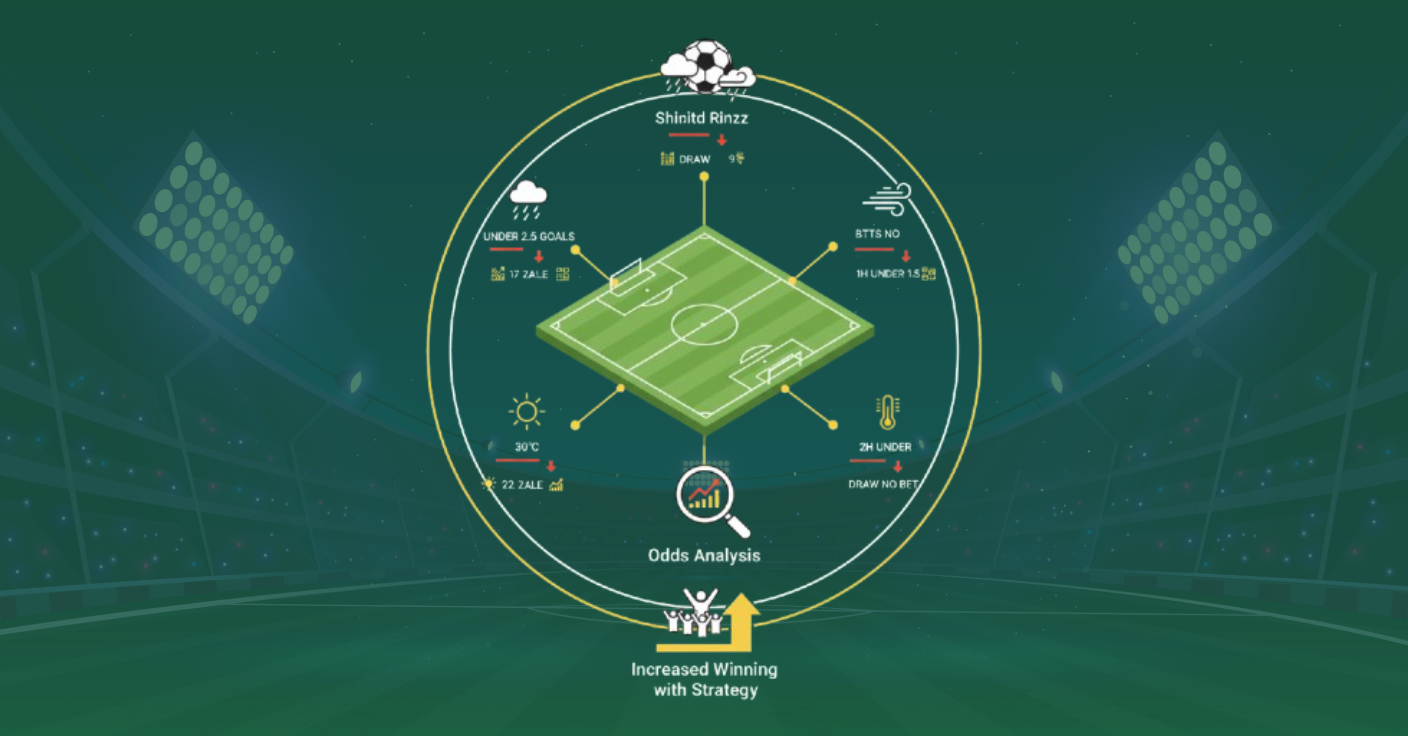
The Bundesliga 2020/2021 season unfolded under unique environmental patterns — heavy rainfall, varying turf maintenance due to pandemic restrictions, and colder-than-average winter spells. For those betting on goal totals, these external conditions changed match tempo, ball behavior, and finishing efficiency. Understanding their impact helps serious bettors better align their over/under wagers with context rather than numbers alone.
The Logic Behind Environmental Influence on Totals
Every over/under line assumes a balance of probabilities built on historical scoring rates. But turf softness, wind strength, or low temperatures alter match rhythm in ways the model may not capture. When both teams rely on passing speed or quick pressing, a wet or uneven surface slows transitions, reducing xG buildup. Recognizing this cause-and-effect pattern transforms standard statistics into situational awareness.
Weather Extremes and Scoring Patterns
The 2020/2021 campaign recorded some of the most volatile matchday forecasts in recent memory. Temperature swings reached 20°C in early spring, while heavy rains hit mid-season fixtures in Bremen and Freiburg. These conditions directly impacted shot conversion and total goal distribution.
| Condition Type | Average Total Goals | Over 2.5 Hit Rate | Notes |
| Clear & Mild | 3.1 | 64% | Faster ball roll, cleaner finishing |
| Rain & Wet Turf | 2.3 | 41% | Slower transitions, poor footing |
| Windy (>25 km/h) | 2.5 | 48% | Long shots distorted, aerial duels dominate |
| Frozen or Heavy Turf | 2.1 | 36% | Controlled tempo, minimal counterplay |
These figures indicate environmental drag: technical teams lost tempo advantage on poor surfaces, while defensive units thrived in physically demanding weather. For sharp bettors, such conditions pointed toward under opportunities regardless of historical averages.
How Pitch Quality Modified Playing Styles
Bundesliga grounds are known for upkeep, but the 2020/2021 schedule compressed rest periods and limited maintenance windows. Turf density fell late in winter, increasing irregular ball bounces and affecting control-heavy teams like Borussia Mönchengladbach and Leverkusen. Matches involving these sides often dipped below market goals when spacing suffered.
Mechanism: Ball Dynamics Under Turf Stress
When grass moisture alters friction, passes decelerate mid-roll, disrupting positional play. This mechanical delay reduces successful final-third entries and lowers shot volume per possession cycle. Even elite sides cannot compensate fully, making “unders” structurally supported across spans of poor pitch elasticity.
Integrating Data with Pre-Match Decision Making
Pre-match betting efficiency increases when bettors incorporate live meteorological updates and surface data. Simple model recalibration — e.g., adjusting expected goal totals by 0.3–0.5 under certain weather thresholds — yields a notable edge. While bookmakers adjust slowly, proactive bettors can enter early when forecasts show deterioration before odds tighten.
Case-Specific Situations with UFABET
When weather volatility intersects with tactical mismatch, it creates prime conditions for informed action. Under such scenarios, using a betting interface that aggregates both odds data and live weather feeds supports decision timing. For instance, a bettor analyzing matchday 15 under cold winds at Augsburg might evaluate market stasis through ยูฟ่า168, where liquidity levels often adjust slower than major exchanges. Employing conditional alerts based on real-world field feedback provides an edge no static model delivers.
Identifying When Weather Does Not Matter
Despite the apparent influence, not all fixtures respond similarly. Some teams — Bayern Munich or Leipzig, for example — maintain tactical dominance regardless of pitch degradation. Their adaptive patterns neutralize weather disadvantage through superior spacing and switching speed. Here, market overreactions can produce misplaced unders, showing how context overrides averages.
List of indicators to filter non-impact matches may include:
- Consistent high-pressing volume across varying surfaces
- Artificial turf or hybrid grass maintaining even roll speed
- Top-6 teams with over 2.8 xG averages over multi-week periods
Such filters help bettors distinguish false environmental signals from legitimate handicap triggers. It turns raw weather observation into disciplined data refinement, reducing confirmation bias.
Applying Environmental Logic Beyond Sportsbooks via Casino Online
When bettors extend this weather-based framework into other wagering environments, analytical parallels emerge. For example, decision calibration under uncertain variables resembles model selection in a casino online setting, where players balance odds volatility against control precision. Through adaptive strategy testing — adjusting parameters based on situational inputs — both sports and gaming participants enhance expectation management. This shared logic reinforces risk literacy across betting disciplines.
The Failing Edge: When Models Overfit Conditions
The weakness of environment-first models lies in overfitting short-term anomalies. A single rain-soaked weekend can mislead bettors into assuming patterns where variance reigns. Overemphasis on surface narratives may bypass broader tactical constants that truly decide outcomes. Sustainable success requires convergence between data context and physical observation, never one dominance.
Summary
In the Bundesliga 2020/2021 season, field and weather conditions shaped scoring rhythms, influencing goal totals beyond normal fluctuation. Cold spells and pitch degradation curtailed attacking fluidity, favoring tactical unders. However, only by merging meteorological insight with statistical discipline can bettors achieve consistency. For serious bettors, the environment is neither noise nor gospel — it’s a variable worth weighting intelligently before every stake.